
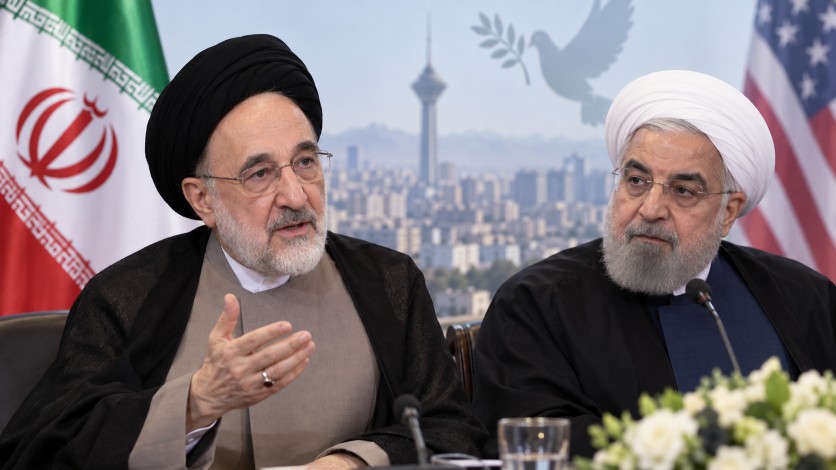
In a notable divergence from Iran’s traditional hardline stance, former Iranian presidents Mohammad Khatami and Hassan Rouhani have advocated for what they describe as an “honourable” or “dignified” peace with the United States. This call for a diplomatic resolution challenges the prevailing warlike rhetoric that has long characterized Iran’s relationship with Washington. Rouhani has taken the discussion a step further by suggesting that the Iranian public should have a voice in deciding the future course of this conflict. He questioned the wisdom of maintaining a confrontational stance against major powers if it does not have popular support, raising the issue during a recent meeting with former officials.
Khatami also echoed the sentiment that Iran’s governance should not be driven by sustained wartime emotions. He has been a strong proponent of diplomacy and negotiation, asserting that Iran’s long-term national interests should take precedence over continual confrontation. However, these remarks have not been well-received by Iranian hardliners, who have responded with strong criticism. Conservative media outlets have accused the former presidents of advocating for surrender, and loyalist rallies have featured chants condemning any calls for compromise. Additionally, the editor of the hardline newspaper Kayhan has even called for investigations into the two former leaders.
This internal debate within Iran is occurring against a backdrop of increasing economic pressure. The country is grappling with rising fuel costs and diminishing oil revenues, which are compounding its economic challenges. Moreover, the strategic Strait of Hormuz remains a focal point of tension with significant implications for global energy markets. Despite these pressures, Iranian officials have continued to project a stern public image, with warnings that Tehran might adopt a more aggressive military posture if diplomatic efforts with the United States falter. This raises the specter of potential escalation rather than immediate concessions in response to economic hardships.
Amid these tensions, regional diplomatic efforts are still in motion. Notably, Saudi Arabia and Iran have maintained communication regarding regional tensions, with high-level discussions aiming to avert further escalation and enhance stability. These efforts highlight the complex interplay between diplomacy and resistance within the region. While figures like Khatami and Rouhani push for negotiations and increased public involvement in decision-making, Iran’s current leadership remains steadfast in its warnings of military escalation if its demands remain unmet.