
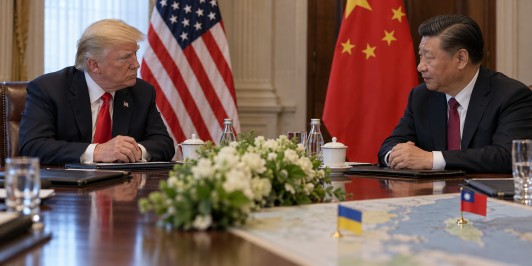
During a significant summit at the White House on September 24, U.S. President Donald Trump and Chinese President Xi Jinping engaged in discussions on pivotal international issues such as Ukraine and Taiwan. This meeting marked their second face-to-face encounter this year and was a key component of Xi’s state visit to Washington.
The conflict in Ukraine was a major topic of discussion. Ukrainian President Volodymyr Zelenskyy had previously urged President Trump to leverage China’s influence with Russia to aid in resolving the ongoing war. Although China maintains that it is not directly involved in the Ukraine conflict, it continues to have substantial economic ties with Russia. This relationship remains a critical element in global efforts to address the war.
Taiwan also featured prominently in the summit’s agenda. President Xi reiterated China’s stance against Taiwanese independence, underscoring Beijing’s emphasis on national unity and territorial integrity. This reflects China’s long-standing policy regarding Taiwan, which it considers a part of its sovereign territory.
Beyond these specific issues, the leaders discussed broader U.S.-China relations, touching on areas of cooperation and competition, as well as regional and global challenges. The discussions were part of a larger diplomatic engagement that included formal meetings and a state dinner at the White House.
The summit provided an opportunity for both nations to address pressing international matters while also exploring ways to manage their complex bilateral relationship. The outcomes of these discussions could have significant implications for global diplomacy and international policy-making.