
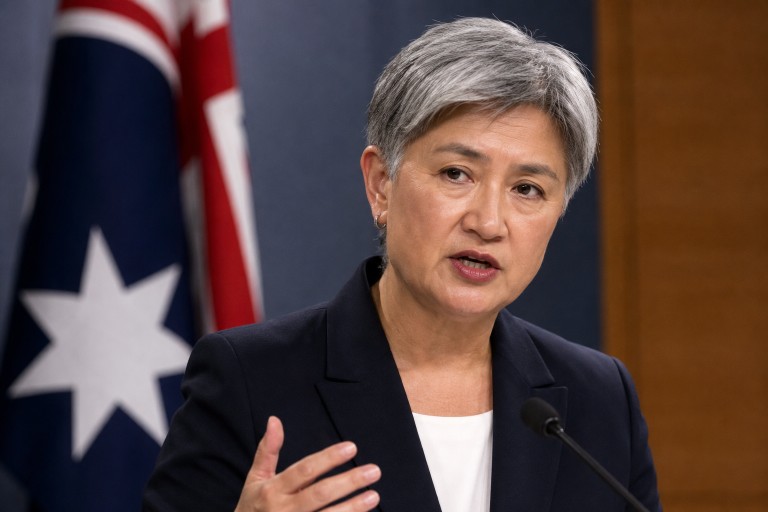
Australia’s Foreign Minister Penny Wong is poised to deliver a strong message against China’s assertive actions in the Indo-Pacific, emphasizing that neither Australia nor its regional allies will succumb to intimidation. Growing apprehensions about Beijing’s military build-up and recent maneuvers in the region will be central to her address at the ASEAN Foreign Ministers’ Meeting in the Philippines.
Wong is expected to specifically critique China’s recent test of a nuclear-capable submarine-launched missile in the South China Sea. She will argue that the missile test was carried out with insufficient transparency and lacked prior notification, contributing to regional instability. The minister will highlight concerns over China’s swift military advancements and its expanding nuclear capabilities, urging for greater openness to ensure stability in the region.
Her comments come on the heels of a tense incident in the South China Sea, where the Philippines accused the China Coast Guard of using force against one of its sailors. Australia, aligning itself with regional partners, has voiced its worries over actions that could compromise the safety of vessels from countries like the Philippines, Vietnam, Malaysia, and Indonesia.
Beyond regional security issues, Wong will also address the potential risks associated with any disruption in the Strait of Hormuz. She is expected to warn that instability in this crucial maritime route could have far-reaching impacts on energy supplies, trade, and food security throughout the Indo-Pacific. Emphasizing the necessity of open international sea lanes, Wong will note that numerous countries in the region rely heavily on uninterrupted maritime trade for essentials like fuel and fertilizer.
Australia’s commitment to collaborating with ASEAN partners will be reaffirmed, with a focus on enhancing regional stability, securing supply chains, and bolstering economic resilience amidst escalating geopolitical tensions. Wong’s address is anticipated to reinforce Australia’s stance on maintaining peace and cooperation within the Indo-Pacific region.