
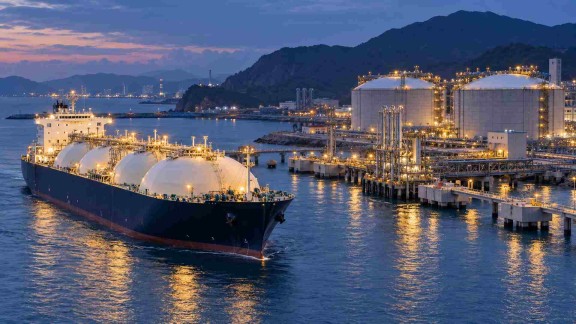
Taiwan is set to significantly increase its imports of liquefied natural gas (LNG) from the United States, with expectations for the US share to exceed 20% of Taiwan’s total LNG supplies this year, according to Taiwan’s Minister of Economic Affairs, Kung Ming-hsin. This marks a substantial rise from the 10% share recorded last year and reflects Taiwan’s strategy to diversify its energy sources and bolster energy security.
The government projects that by 2029, US-sourced LNG will account for 25% of Taiwan’s LNG imports. Negotiations are underway that might further elevate this figure to 30% or more by 2032, contingent upon the progress of an LNG project in Alaska. This effort is part of Taiwan’s broader plan to secure long-term energy supplies amid growing natural gas demand.
CPC Corp, Taiwan, the state-owned oil and gas company, is considering investing up to US$4.4 billion in the Alaska project, potentially purchasing about six million tonnes of LNG annually once production commences. However, the specific terms, including the investment amount, ownership stake, and contractual details, are still under negotiation.
Kung emphasized that securing long-term LNG contracts could mitigate price volatility and enhance supply stability. The geographical proximity of Alaska to Taiwan offers logistical advantages, with shipping times estimated at around 10 days, which could reduce transportation risks.
Funding for the investment will depend on the project’s final structure and CPC Corp’s financial standing, with possible sources including capital injections, retained earnings, and loans. Payments are expected to be phased according to the project’s development timeline.
The increase in LNG imports from the US could also contribute to balancing Taiwan’s trade surplus with the United States, as noted by Kung. This strategic energy partnership underscores Taiwan’s commitment to enhancing its energy security through diversified and stable sources of LNG.