
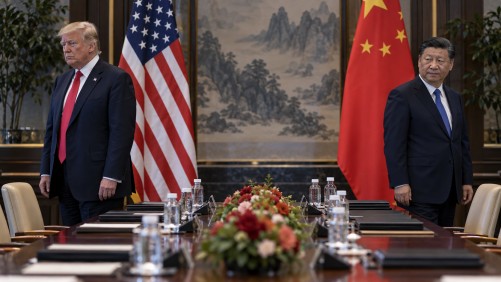
US President Donald Trump and Chinese President Xi Jinping concluded a three-day summit in Washington without reaching a significant agreement on artificial intelligence (AI), despite increasing global concerns about the rapid development of this technology. The summit, marking the first visit by a Chinese president to the White House in over a decade, addressed several issues including international conflicts and trade relations.
While the leaders extended an existing trade truce for another two months, AI was a pivotal topic during their discussions. President Xi emphasized the joint responsibility of the United States and China to develop and manage AI responsibly, ensuring that it remains under human control. He advocated for increased cooperation between the two nations to address potential risks associated with AI.
However, despite the emphasis on AI, no framework or agreement was announced to slow the development of advanced AI systems or to establish common safety standards. President Trump highlighted the importance of maintaining the United States’ technological lead over China and introduced his favored term “super intelligence” for advanced AI, though detailed outcomes of the discussions on AI were not disclosed.
Beyond AI, the summit covered other significant issues such as the wars in Iran and Ukraine, Taiwan, and trade relations. The two leaders are expected to continue their dialogue at upcoming international events, including the Asia-Pacific Economic Cooperation summit in China and the G20 summit in the United States.
The summit also included a visit to the National Archives, where Trump and Xi viewed essential US founding documents, underscoring the historical significance of this diplomatic engagement.