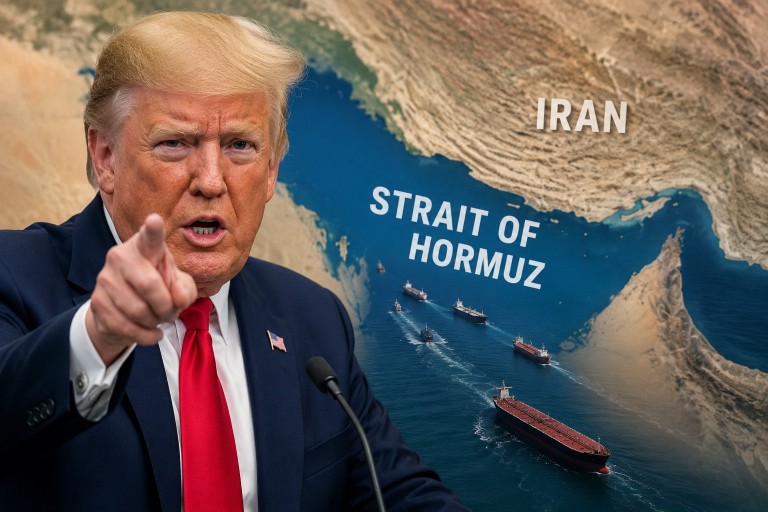
Amid ongoing tensions with Iran, US President Donald Trump has suggested a significant shift in policy by threatening to declare the Strait of Hormuz as “a territory of the United States.” During remarks in New York on Friday, Trump indicated that this declaration could be made “pretty soon” following a US victory over Iran. He further asserted that the US currently exercises control over this vital maritime passage through a blockade.
The Strait of Hormuz is a crucial channel for global energy supplies, with approximately 20% of the world’s seaborne oil passing through. This strategic waterway is situated between Iran and Oman and has faced significant disruptions since the US and Israel initiated military actions against Iran. The extent to which Trump’s comments reflect an actual shift in US policy remains uncertain, leaving room for speculation that they may have been politically motivated statements.
In response, Iran has firmly dismissed the threat. Deputy Foreign Minister Kazem Gharibabadi emphasized that Tehran would not succumb to US pressure and maintained that the authority to open or close the strait remains under Iranian control. Additionally, Iranian Foreign Minister Abbas Araqchi clarified that Tehran has not committed to resuming negotiations with Washington, despite ongoing message exchanges facilitated by Qatar and Pakistan, which he stated do not amount to formal talks.
Iran has stipulated several prerequisites before considering the resumption of shipping through the Strait of Hormuz. These conditions include compensation for damages caused by the conflict, the removal of sanctions, and the release of frozen Iranian assets. The unresolved conflict and its impact on shipping have led to increased fuel prices, placing additional strain on consumers. President Trump defended the higher prices, arguing that they are a necessary measure to prevent Iran from acquiring nuclear weapons.
The prolonged standoff over the Strait of Hormuz has sparked concerns regarding global energy security and the broader economic repercussions of the conflict. As the situation continues to unfold, the international community watches closely, wary of the potential for further escalation and its far-reaching consequences.