
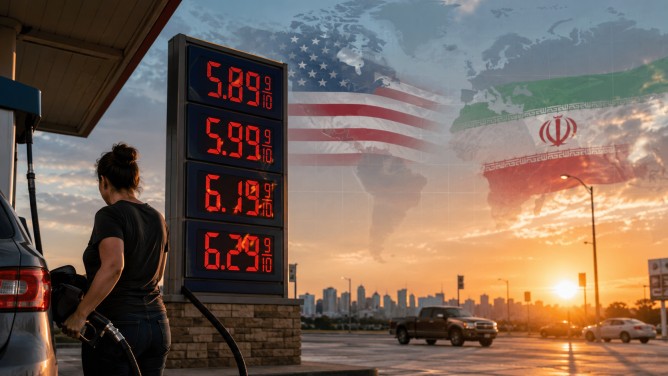
Gasoline prices across the United States have surged to unprecedented levels for the month of August, driven by escalating tensions in the Middle East. The national average has hit $4.06 per gallon, marking an increase of about 5 cents over the past week and approximately $1 more than at this time last year. States such as California and Hawaii are experiencing even higher prices, with averages soaring to around $5.50 per gallon.
The spike in prices is largely attributed to the ongoing geopolitical unrest following the US-Israel conflict with Iran. This situation has been exacerbated by disruptions in the Strait of Hormuz, a critical passageway for global oil shipments. Although Brent crude oil prices have retreated from a high of $112 per barrel, they remain significantly elevated compared to last year’s figures.
Initially, gasoline prices saw a temporary decline when minor agreements temporarily eased tensions between the United States and Iran. However, the stall in negotiations regarding Iran’s nuclear program, coupled with growing concerns about an extended conflict, has led to a resurgence in fuel costs. The recent failure to reach a diplomatic resolution within a 60-day window, alongside new threats issued by Trump against Oman, has further fueled anxieties about regional instability.
The burden of rising fuel costs is hitting American households hard, especially when combined with already high living expenses. Reports indicate that over the past six months, Americans have spent tens of billions more on gasoline than they would have prior to the conflict. If energy prices remain elevated for a prolonged period, this could result in renewed inflationary pressures, complicating the economic landscape further.