
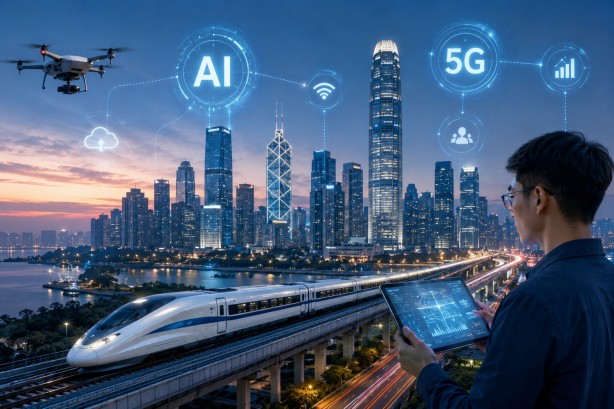
China is fast-tracking the development of its digital economy, significantly enhancing the adoption of artificial intelligence, digital infrastructure, and smart technologies across various sectors, including public services. By 2025, the digital economy in China had surged to 49 trillion yuan ($7.22 trillion), making up about 35% of the nation’s GDP. The core digital industries within this economy contributed over 10.5% to the GDP, showcasing a substantial impact.
In an ambitious move under its 15th Five-Year Plan (2026–2030), the country is setting its sights on further broadening AI applications, bolstering data security measures, refining digital governance, and fostering international collaboration. These initiatives underline China’s strategic focus on intertwining technological advancement with economic growth.
Cities like Beijing are at the forefront of this digital transformation. They are implementing innovative solutions such as internet hospitals and AI-powered traffic management systems. Additionally, shared medical imaging platforms and smart utility networks are being introduced, illustrating the practical benefits of digital technologies in enhancing both economic development and the quality of public services.
The efforts being made by China highlight a comprehensive approach to digital integration, aiming to secure a leading position in the global digital economy. By prioritizing the expansion of AI and ensuring robust digital governance, China seeks not only to boost its economy but also to improve the everyday lives of its citizens through smarter public service solutions.