
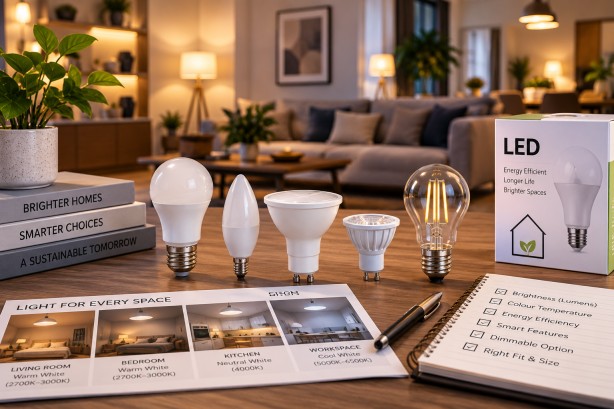
As LED lighting options broaden, they remain a favored choice for residential and office settings, offering a blend of low energy usage and longevity. The expanding variety allows consumers to select according to brightness, color temperature, bulb shape, connectivity, and efficiency. However, the decision should go beyond just price or brand, considering factors such as the room, fixture, and the specific lighting needs for optimal results.
Brightness, indicated by lumens, is a crucial factor when choosing LED bulbs, differing from traditional bulbs where wattage was a brightness proxy. For many general purposes, bulbs emitting between 800 to 1,000 lumens suffice, although the perfect brightness varies with room size and the type of lighting—be it ambient, task, or accent. Compatibility with fixtures and the fixture’s maximum wattage rating should also be verified.
Color temperature, measured in Kelvin, affects whether light appears warm or cool. Bulbs ranging from 2700K to 3000K typically offer warm, inviting light ideal for bedrooms and living areas. Conversely, cooler light, around 4000K to 5000K, suits kitchens and offices where clarity is essential. Homes can mix lighting temperatures, using warm light for relaxation spaces and cooler light for work areas.
Energy efficiency is a significant driver for switching to LEDs, which use less electricity and produce less heat compared to incandescent bulbs. Cost savings are dependent on various factors, including bulb wattage, usage duration, and electricity rates. It’s important to compare rated wattage and lifespan for accurate evaluations. LED longevity surpasses that of incandescent bulbs, yet real-life performance can vary due to heat management and product quality. Bulbs in enclosed fixtures may face heat issues, so checking for specific approvals is advised.
Beyond efficiency, light quality and flicker are crucial for comfort, especially in spaces where people spend extended periods. Specifications such as color rendering and flicker performance are worth reviewing, especially for tasks requiring accurate color perception. Consumers considering advanced features might look at smart LED bulbs offering connectivity and control options, though these come at a higher cost. Ultimately, selecting the right LED bulb involves evaluating technical specifications to ensure it meets the intended application, balancing brightness, appearance, efficiency, and reliability without unnecessary expenses.
Legal Disclaimer:
The information contained in this article has been provided by independent third-party contributors, clients, or content partners. We do not independently verify the accuracy, completeness, legality, ownership, licensing, or reliability of submitted content, including text, images, videos, trademarks, or other media materials. The submitting party is solely responsible for ensuring that all content, including images and media assets, complies with applicable copyright, trademark, licensing, and intellectual property laws. We disclaim liability for any unauthorized use of copyrighted or proprietary materials by third parties. If you believe that any content published on this platform infringes your intellectual property rights, kindly contact the author above for prompt review and resolution.