
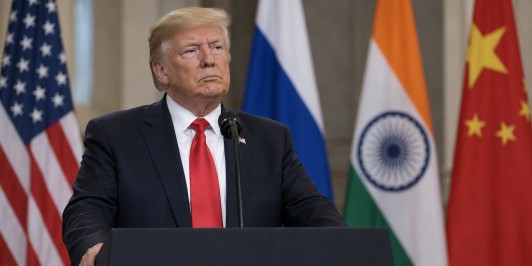
The potential for significant economic repercussions looms as the United States considers imposing steep tariffs on countries like India and China if they continue to buy Russian energy. US President Donald Trump has signed into law the Lindsey O. Graham Sanctioning Russia and Iran Act of 2026, empowering him to levy tariffs up to 100% on nations purchasing Russian oil and natural gas. This move aims to pressure Moscow to end its conflict in Ukraine, a strategy that could disrupt global energy markets and strain international relations.
Announcing his intentions at the United Nations General Assembly, President Trump emphasized the newfound authority granted by the legislation. He expressed readiness to deploy these tariff powers to potentially bring about an end to the ongoing war between Russia and Ukraine. The law, while not mandating immediate action, provides the US president with discretion over the application of these tariffs, thereby leaving countries like India and China in a state of uncertainty regarding future trade implications.
The legislation goes beyond energy tariffs, also introducing a range of sanctions targeting Russian officials, financial entities, and sectors accused of facilitating Russia’s bypassing of existing sanctions. These measures underscore the US’s broader strategy of applying multifaceted pressure on Moscow to engage in peace negotiations.
Ukrainian President Volodymyr Zelenskyy has shown support for the sanctions, indicating a readiness to engage in further dialogue aimed at resolving the conflict. Washington’s latest legislative move is part of its continued efforts to leverage economic tools in pursuit of a diplomatic solution to the war.
This development places significant pressure on major buyers of Russian energy, particularly India and China, to reassess their energy procurement strategies amidst the potential for increased tariffs. While the immediate application of these tariffs remains uncertain, the legislation sends a clear message of the US’s willingness to employ economic measures to influence geopolitical outcomes.