
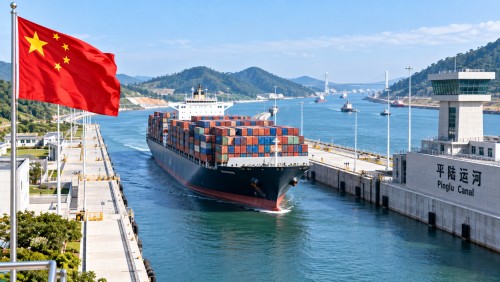
The recent opening of the Pinglu Canal in China’s Guangxi Zhuang Autonomous Region is set to significantly impact trade logistics by providing a more efficient waterway linking southwest China to the sea. This development is poised to slash logistics costs by up to 30%, offering a more direct route for transporting goods such as coal, grain, and automobile parts to international markets, particularly in Southeast Asia.
Spanning 134.2 kilometers, the canal connects Hengzhou to the Beibu Gulf as part of the New International Land-Sea Trade Corridor. The strategic waterway, constructed at a cost of approximately 72.7 billion yuan ($10.75 billion), allows vessels of up to 5,000 tonnes to bypass the longer traditional route through Guangdong ports, reducing the journey by more than 560 kilometers. This efficiency is expected to save over 5 billion yuan annually in transportation expenses.
The canal is particularly advantageous for businesses in southwest China, an area that has traditionally faced higher costs for moving goods to coastal ports. By facilitating a more direct path to ASEAN markets, which accounted for over $1 trillion in trade with China in 2025, the canal enhances economic ties with China’s largest trading partner. In the first seven months of 2026 alone, trade between China and ASEAN reached $744.41 billion.
In addition to its economic benefits, the Pinglu Canal incorporates notable environmental measures. More than 98% of the material excavated during its construction was repurposed, and the canal includes a fish passage and wildlife crossing to preserve local ecosystems. Advanced water-recycling systems are in place to conserve over 1 billion cubic meters of water annually.
The canal’s infrastructure includes three navigation hubs with twin-line ship locks designed to manage the 65-meter difference in water levels, ensuring smooth vessel transit. This project is expected not only to boost trade but also to encourage further investment and supply-chain integration along its route, thereby strengthening the economic landscape of the region.