
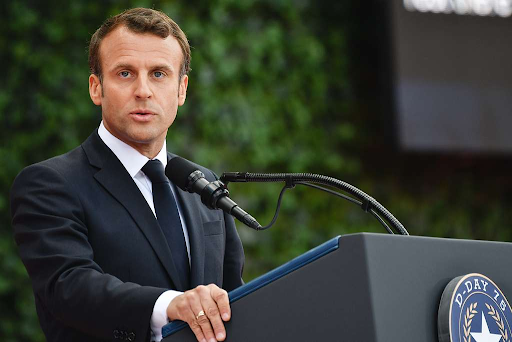
France’s Emmanuel Macron has a plan. As his country holds the G7 presidency, he is pushing child safety in the digital world to the top of the international agenda, and the AI Impact Summit in Delhi gave him a global platform to announce his intentions. Macron’s vision is sweeping: a world in which the laws that protect children in the physical world apply with equal force online, enforced not just by governments but by the platforms that profit from children’s attention.
The starting point for any honest conversation about AI and children is the data, and the data is grim. Unicef and Interpol jointly published research this month showing that 1.2 million children across 11 countries had their images manipulated into sexually explicit deepfakes in the last year. In some of the countries surveyed, the figure is one in 25 children — one per classroom. These are not edge cases or hypothetical risks. They are the lived reality of children navigating an internet that was not designed with their safety in mind.
Macron’s domestic policy already reflects this urgency. France is in the process of banning social media access for children under 15, a measure that reflects a broader philosophical commitment: the state has a duty to protect children from environments it recognises as harmful, even when those environments are digital. He is now seeking to export this philosophy through the G7, using France’s temporary presidency to push for internationally coordinated action.
The geopolitics of AI regulation are complicated, however. The Trump administration has made clear its opposition to what it sees as heavy-handed European regulation, with its AI adviser openly criticising the EU’s AI Act in front of an international audience. Macron’s response was to challenge the premise directly: Europe is not anti-innovation, he argued, but pro-safety, and in the long run those are not mutually exclusive. Whether that argument persuades Washington remains to be seen.
Wider questions about AI governance — including who controls the most powerful models and whether that power is dangerously concentrated — loomed over the entire summit. António Guterres warned of AI monopolies. Narendra Modi advocated for open-source development. Dario Amodei raised concerns about autonomous AI systems. Macron’s child safety agenda sits within this larger debate, and his political skill will be in keeping it there — ensuring that as the world figures out who governs AI, it does not forget the most vulnerable people affected by the answer.